
Only one in ten drug candidates entering human testing actually reaches the public. This staggering statistic shows why medicine testing must remain rigorous to ensure patient safety.
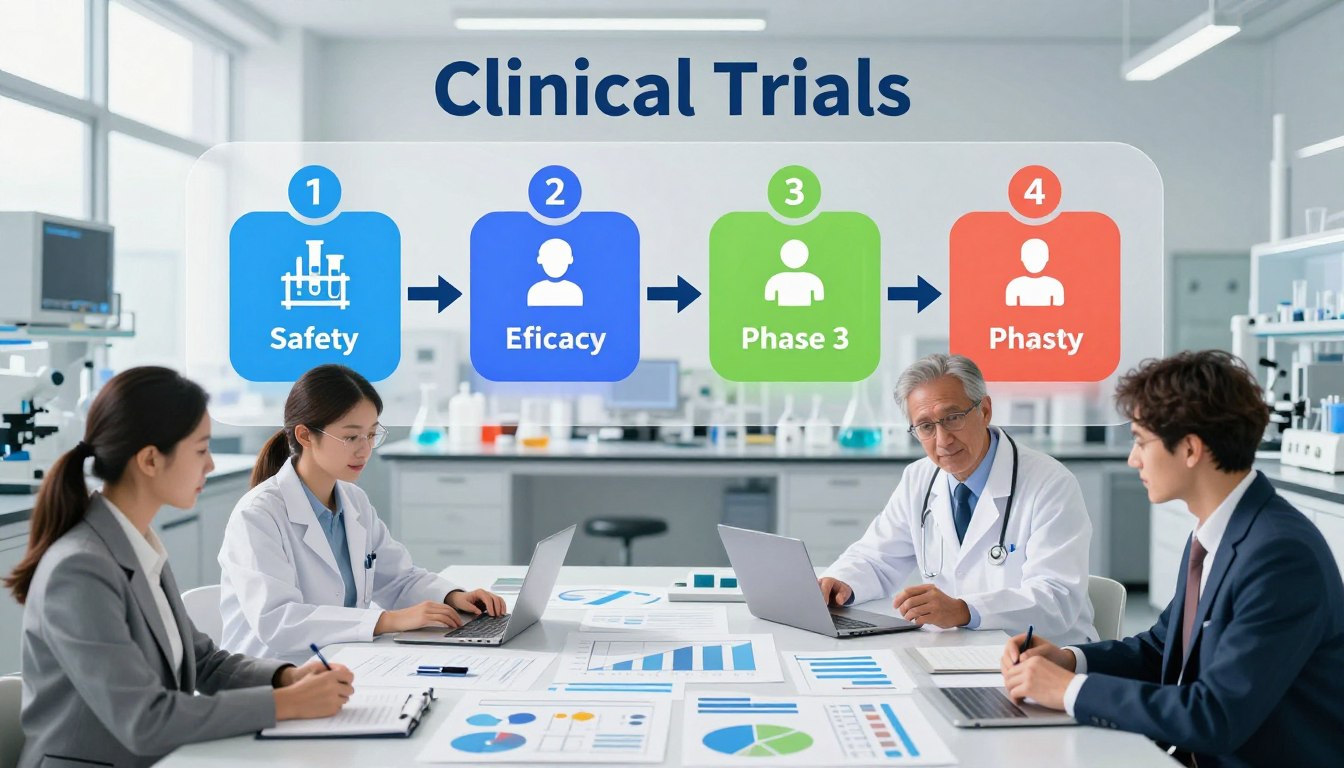
Every new treatment follows a strict path. Understanding these research stages helps people navigate complex medical advancements easily while staying informed about new cures.
These structured steps act as filters. They remove ineffective options and spotlight high-quality medicine.
Researchers work tirelessly through these levels to gather data. This process turns scientific ideas into real-world health solutions for everyone.
Healthcare relies on this system to build trust between doctors and patients. Science moves slowly because lives are on the line.
Key Takeaways
- Research stages ensure drug safety.
- One in ten drugs pass all tests.
- Studies protect patients from harm.
- Each stage has specific goals.
- Modern medicine depends on data.
- Testing takes several years.
What Are Clinical Trials and Why Do They Matter
To appreciate the complexity of medical research, it’s essential to understand the role and significance of clinical trials. Clinical trials are research studies performed in people that are aimed at evaluating a medical intervention, such as a drug, device, or treatment regimen. They are crucial for advancing medical knowledge and developing new treatments.
The Purpose of Clinical Research
The Purpose of Clinical Research
Clinical research is designed to assess the safety and efficacy of new medical interventions. It helps determine whether a new treatment works as expected, is safe for humans, and is better than existing treatments. The primary purpose is to provide evidence that can inform medical decisions and improve patient outcomes.
Some key objectives of clinical research include:
- Evaluating the safety and efficacy of new treatments
- Identifying potential side effects and risks
- Comparing new treatments with existing ones
- Determining the optimal dosage for new medications
Who Participates in Clinical Trials
Clinical trials involve various participants, including healthy volunteers and patients with specific medical conditions. The participants are carefully selected based on the trial’s objectives and eligibility criteria. Researchers aim to recruit a diverse group of participants to ensure that the results are applicable to a broad population.
The Importance of Each Testing Stage
Clinical trials are conducted in multiple stages or phases, each with a distinct purpose. Understanding the importance of each stage is crucial for appreciating the overall clinical trial process.
The different stages of clinical trials are designed to answer specific questions:
- Phase I trials focus on safety and dosage.
- Phase II trials evaluate efficacy and side effects.
- Phase III trials confirm efficacy and monitor side effects in a larger population.
Each stage builds on the results of the previous one, ensuring that new treatments are thoroughly tested before they are approved for widespread use.
The Foundation: Preclinical Research Before Human Testing
Preclinical research is the foundational step in the clinical trial process stages, laying the groundwork for the subsequent phases that follow. This critical phase involves extensive laboratory testing and animal studies to assess the safety and efficacy of new drugs or treatments before they are tested on humans.
Laboratory Testing and Drug Development
Laboratory testing is a crucial component of preclinical research, where scientists conduct in vitro experiments to evaluate the biological activity of new compounds. This stage helps identify potential drug candidates and understand their mechanism of action. Drug development involves the formulation of the drug, its manufacturing process, and initial stability testing to ensure it can be safely administered to humans.
The process of drug development is complex and involves several steps, including the identification of a lead compound, optimization of its chemical structure, and preliminary assessments of its pharmacokinetics and pharmacodynamics. These studies are essential for determining the appropriate dosage and potential side effects.
Animal Studies and Initial Safety Assessments
Following promising results from laboratory tests, the next step involves animal studies to further evaluate the safety and efficacy of the drug. These studies are conducted in accordance with strict regulatory guidelines to ensure ethical treatment and minimize animal suffering.
Animal studies provide valuable insights into the drug’s toxicity, its distribution within the body, and its potential impact on various physiological systems. The data from these studies are critical for making informed decisions about whether a drug is safe enough to proceed to human clinical trials.
In conclusion, preclinical research is a vital part of the clinical trial process stages, ensuring that only the safest and most effective treatments are advanced to human testing. By thoroughly evaluating new drugs and treatments in the laboratory and in animal models, researchers can significantly reduce the risks associated with clinical trials in humans.
Phases of Clinical Trials Explained: From First Tests to Final Approval
From initial microdosing studies to large-scale trials, the phases of clinical trials are designed to ensure that new treatments are both safe and effective. The progression through these phases is a critical step in the development and approval of new medical interventions.
Phase 0: Microdosing and Exploratory Studies
Phase 0 trials are the first stage of testing in humans and involve microdosing, where participants are given very small doses of the drug. This phase helps researchers understand how the drug behaves in the human body.
What Happens in Phase 0
In Phase 0, a small number of participants are given a limited dose of the drug to assess its pharmacokinetics and pharmacodynamics. This phase is exploratory and helps in deciding whether the drug is worth further investigation.
Who Participates and Why
Participants in Phase 0 trials are typically healthy volunteers or patients with the condition the drug is intended to treat. They are selected based on strict criteria to ensure the trial’s safety and validity.
Phase I: First Tests in Humans for Safety
Phase I trials focus on assessing the safety of the drug. A small group of healthy volunteers or patients are given the drug to monitor its effects and determine a safe dosage range.
Primary Goals of Phase I Trials
The main objectives are to evaluate the drug’s safety, tolerability, pharmacokinetics, and pharmacodynamics in a small group of people.
Participant Numbers and Selection Criteria
Typically, 20 to 80 participants are involved in Phase I trials. They are selected based on factors like age, health status, and the presence of the condition being treated.
Key Measurements and Outcomes
Researchers measure the drug’s safety profile, including any side effects, and determine the maximum tolerated dose.
Phase II: Evaluating Effectiveness and Optimal Dosing
Phase II trials aim to evaluate the efficacy of the drug and further assess its safety. More participants are involved compared to Phase I.
The Purpose of Phase II Studies
These studies assess whether the drug works as intended and identify the optimal dose. They also continue to monitor side effects.
Study Design and Participant Groups
Phase II trials often involve controlled studies where participants are randomly assigned to receive either the new drug or a placebo/standard treatment.
Monitoring for Side Effects
Researchers continue to monitor participants for adverse reactions and side effects, gaining a better understanding of the drug’s safety profile.
Phase III: Large-Scale Testing for Confirmation
Phase III trials involve a much larger group of participants to confirm the drug’s efficacy, monitor side effects, compare it to commonly used treatments, and collect information that will allow the drug to be used safely.
Objectives and Scope of Phase III
The primary goal is to confirm the efficacy and safety of the drug in a larger, more diverse population.
Study Size and Duration
These trials can involve hundreds or thousands of participants and may last from several months to several years.
Comparing with Existing Treatments
Phase III trials often compare the new drug with existing treatments to assess its relative efficacy and safety.
| Phase | Primary Objective | Number of Participants | Duration |
|---|---|---|---|
| Phase 0 | Exploratory, microdosing | <10 | Short-term |
| Phase I | Safety, tolerability | 20-80 | Several months |
| Phase II | Efficacy, optimal dosing | 100-300 | Several months to 2 years |
| Phase III | Confirm efficacy, safety in larger population | 300-3000+ | 1-4 years |
After Approval: Phase IV and Ongoing Monitoring
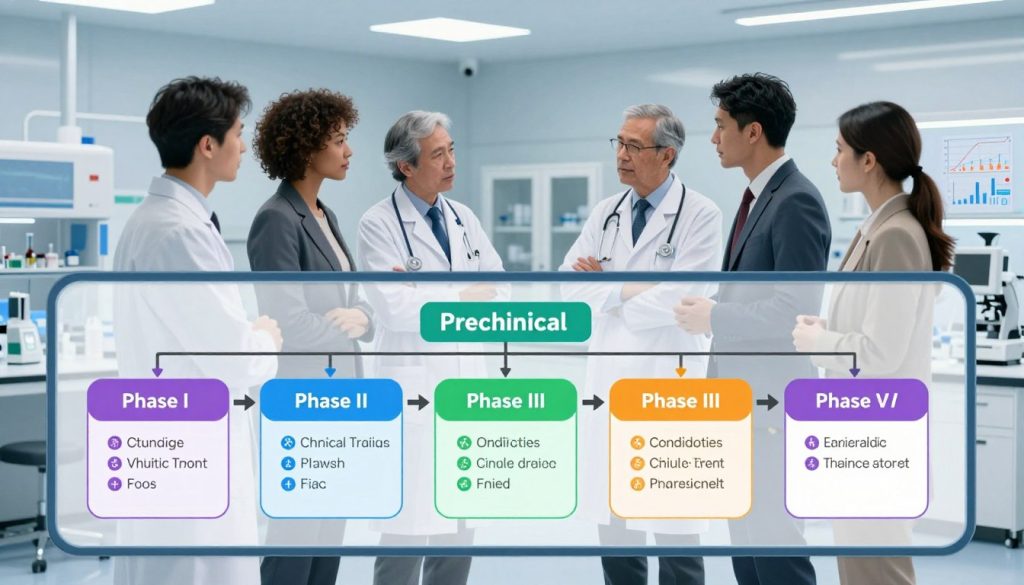
Once a treatment receives approval, the journey doesn’t end; it evolves into Phase IV trials. This phase is crucial for understanding the long-term implications and real-world effects of newly approved treatments.
What Happens in Phase IV Trials
Phase IV trials, also known as post-marketing surveillance trials, are conducted after a treatment has been approved for public use. These studies monitor the treatment’s performance in a larger, more diverse population over a longer period.
The primary objectives of Phase IV trials include:
- Assessing long-term safety and efficacy
- Identifying rare or long-term side effects
- Evaluating the treatment’s effectiveness in different populations
- Comparing the treatment’s performance against existing treatments
As Dr. Jane Smith, a clinical research expert, notes, “Phase IV trials are essential for gathering real-world data that can inform future treatment guidelines and regulatory decisions.”
Post-Market Surveillance and Safety Tracking
Post-market surveillance is a critical component of Phase IV trials. It involves the ongoing monitoring of a treatment’s safety and efficacy after it has been approved.
| Surveillance Aspect | Description | Importance |
|---|---|---|
| Adverse Event Reporting | Collecting data on adverse events reported by patients and healthcare providers | Helps identify rare or previously unknown side effects |
| Patient Registries | Databases that track patients receiving specific treatments | Provides insights into treatment outcomes and patient experiences |
| Safety Signal Detection | Identifying potential safety concerns through data analysis | Enables prompt action to mitigate risks |
Effective post-market surveillance ensures that treatments continue to meet safety and efficacy standards in real-world settings.
Long-Term Effectiveness Studies
Long-term effectiveness studies are a key aspect of Phase IV trials. These studies assess how well a treatment works over an extended period.
As noted by
“The true test of a treatment’s value lies in its long-term performance in diverse patient populations.”
, understanding the long-term effectiveness is crucial for optimizing treatment strategies.

By continuing to monitor treatments through Phase IV trials, researchers can refine their understanding of how treatments perform in real-world scenarios, ultimately improving patient outcomes.
Understanding the Clinical Trial Process and Progression
Understanding the progression of clinical trials is crucial for appreciating the rigorous testing new treatments undergo before approval. The journey from initial research to final approval involves multiple phases, each designed to answer specific questions about the safety and efficacy of a new treatment.
Timeline: How Long Does Each Phase Take
The duration of clinical trials can vary significantly, influenced by factors such as the type of treatment being tested, the condition it aims to treat, and the number of participants required. Generally, Phase I trials last several months to a year, Phase II trials can take up to two years, and Phase III trials often require several years to complete.
| Phase | Typical Duration | Primary Objectives |
|---|---|---|
| Phase I | Several months to 1 year | Safety, Tolerability |
| Phase II | Up to 2 years | Efficacy, Optimal Dosing |
| Phase III | Several years | Confirmation of Efficacy, Safety in larger population |
Success Rates and Moving Between Phases
The success rate of clinical trials varies widely depending on the phase and the therapeutic area. It’s estimated that only a small percentage of drugs that enter Phase I trials eventually gain FDA approval. Success in one phase is no guarantee of success in the next, as each phase has different objectives and challenges.
Common Reasons Trials Stop or Fail
Clinical trials can be stopped or fail for several reasons, including lack of efficacy, safety concerns, or failure to meet predefined endpoints. External factors such as changes in the competitive landscape or strategic decisions by the sponsor can also influence the continuation of a trial.
The Role of the FDA and Other Regulatory Bodies
The FDA plays a critical role in overseeing the clinical trial process, ensuring that trials are conducted ethically and that the data collected is reliable. Regulatory bodies review trial designs, monitor progress, and make decisions about approvals based on the evidence provided.
Key FDA Responsibilities:
- Reviewing and approving trial protocols
- Monitoring trial conduct and safety data
- Making approval decisions based on trial results
Patient Safety Protections Throughout the Process
Patient safety is paramount in clinical trials. Measures to protect participants include informed consent, ongoing monitoring of safety data, and the ability to halt a trial if safety concerns arise. These protections are enforced by regulatory bodies, ethics committees, and the trial sponsors themselves.
Ensuring patient safety is a collaborative effort involving all stakeholders in the clinical trial process.
Conclusion
Understanding the phases of clinical trials is crucial for appreciating the rigorous process behind bringing new medical treatments to market. From preclinical research to Phase IV trials, each stage plays a vital role in ensuring the safety and efficacy of new therapies.
The journey through clinical trial phases is complex and involves careful planning, execution, and regulatory oversight. By grasping the significance of each phase, individuals can better appreciate the efforts of researchers, healthcare professionals, and regulatory bodies like the FDA.
As medical science continues to evolve, the importance of clinical trial phases in advancing healthcare cannot be overstated. These trials not only lead to new treatments but also enhance our understanding of diseases and improve patient outcomes.